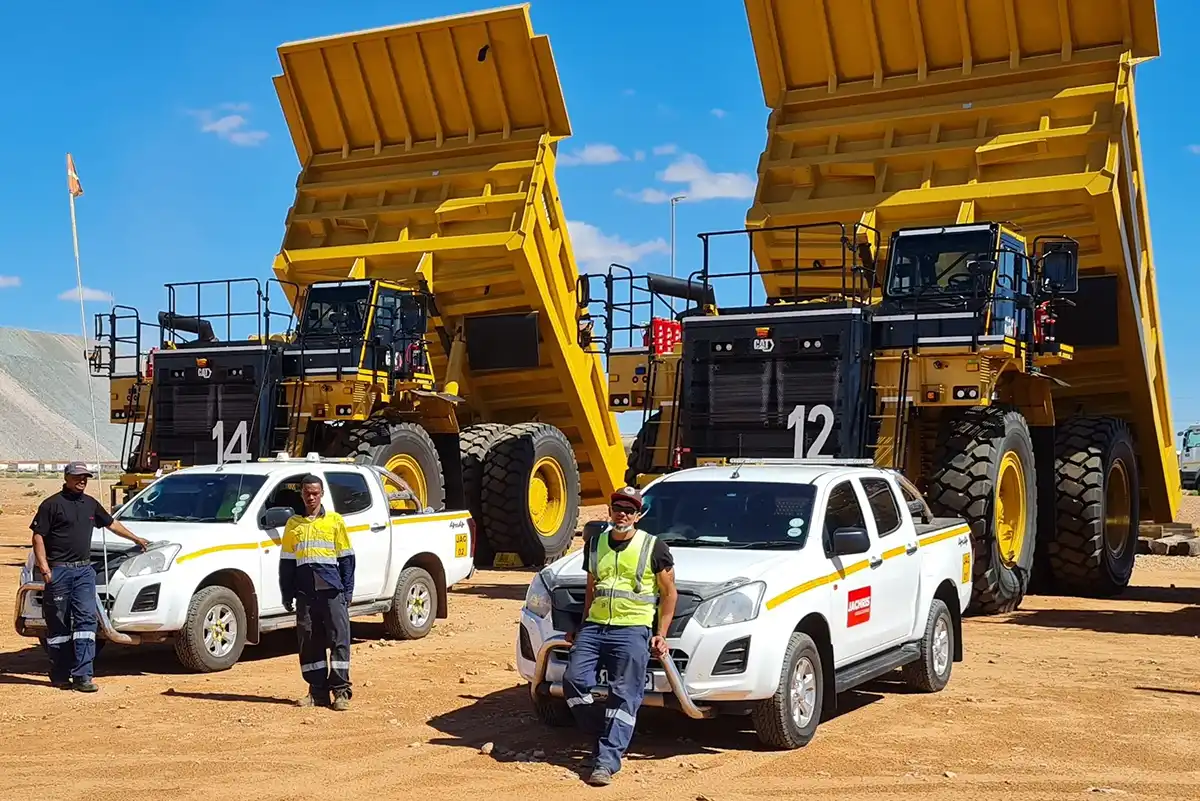
The people on the Jachris On-site Support Teams in Africa are the true heroes of the story.
Walk through any operating mine on the continent, whether it’s a platinum shaft in Limpopo, a copper belt operation in Zambia, or a chrome mine in Zimbabwe, and you’ll notice something. The equipment may be impressive, but it’s the people that make it run.
We talk a lot about output targets, commodity prices, and systems upgrades. Sure, those things are important. But when a hydraulic hose starts weeping fluid at 2am, or a fitting fails mid-shift and the clock is ticking, it’s not a machine that responds. It’s a human being.
Workers’ Day on 1 May is a fitting moment to step back from the dashboards and recognise who is actually keeping Africa’s mining operations alive.
Key Takeaways
- Africa’s mining industry supports millions of livelihoods, and keeping operations running is about far more than output.
- Most mining uptime in Africa is protected through small, unglamorous decisions made correctly under pressure.
- Experienced site knowledge doesn’t transfer automatically. It has to be earned, retained, and supported.
- The gap between a minor fault and a major failure is usually a person who knows what to look for.
- The best support doesn’t replace frontline judgement. It gives that judgement better tools to work with.
Mining Performance Depends on People, Not Just Systems
Africa’s mining industry is one of the most significant employment sectors on the continent. In South Africa alone, according to the Department of Mineral Resources’ SA Mining Performance Report (2024), the industry directly employed around 473,000 people in 2024. And when you factor in an average household of four dependents, that’s nearly 1.9 million people whose lives are sustained by those jobs. Expand that view across the continent, and the numbers grow considerably. In Zambia, the mining sector supported over 73,000 jobs in 2025, while the DRC’s mining industry supported more than 100,000 jobs, and those are just the direct employment figures.
According to the South African Minerals Council’s Mining Matters report, when you include suppliers, the formal employment impact reaches around 874,000 people in South Africa alone, supporting at least 3.5 million people.
These may sound like abstract statistics, but in reality, they translate to school fees, rent, groceries, and futures. They depend on mines running. And mines run because of the people on the ground who make that happen every single shift.
As operations have grown more complex due to more automation, more data, and more remote monitoring, it might be tempting to think the human element is shrinking. It isn’t. If anything, as more moving parts are added to operations, it puts more pressure on frontline mining teams. Modern technology can easily flag a problem, but it takes a skilled technician to diagnose it correctly, respond fast, and make the right call under pressure.
Yes, operational reliability gets built into equipment at the factory. But keeping it reliable is a different job entirely. One that happens in real time, on site, shift after shift.
Why do on-site mining support teams face constant pressure?
Frontline mining maintenance teams aren’t battling dramatic crises most of the time. The real opponent is the relentless grind of normal operating conditions.
As time goes on, equipment will wear down. Hoses and seals will show signs of deterioration, couplings that have been disconnected and reconnected a hundred times may loosen…the list goes on. This is just the inevitable physics of heavy industrial equipment working hard in demanding environments.
Add in seasonal ramp-ups, supply chain delays that force teams to extend component life beyond comfortable margins, and workforce fluctuations that mean knowledge doesn’t always transfer as smoothly as it should. Then you start to understand why experienced hands on site are worth so much.
Every site has people who “just know things.” They know which pump runs hot, which line tends to build pressure in cold weather, which fitting needs checking after a blast. That knowledge lives in your people.
And when those people aren’t there, or aren’t supported properly, there’s a ripple effect on the whole operation.
Preventing Small Issues from Becoming Major Failures
Behind every clean shift is someone with the experience to read a situation correctly, the trust to act on it, and the tools to follow through. This is where the real value of a mining maintenance team shows itself, and yet, it’s mostly invisible.
The decisions that protect mining uptime in Africa are often small ones:
- Catching early signs of hose wear and scheduling a replacement during planned downtime rather than scrambling during a breakdown.
- Recognising that an unusual vibration pattern is worth stopping to investigate, even when the pressure is to keep moving.
- Managing an unexpected component failure in a way that limits the blast radius, keeping one area down while the rest of the operation continues.
When a technician spots a weeping fitting during a walkdown and flags it before it becomes a full hydraulic failure, that near-miss won’t appear in any report. But the avoided downtime will save everyone involved both time and money.
What do high-performing sites do differently?
Some sites consistently outperform others on reliability metrics, not because they have better equipment, but because of how they use their people and what they put in place to support them.
For example, high-performing sites will run structured inspection routines with real walkdowns where teams are trained to know what they’re looking for. They’ve moved from purely reactive maintenance toward preventive and predictive practices, which means teams are tracking wear cycles and scheduling interventions before failures occur.
They also invest in on-site capability. When something goes wrong at 11 pm, the ability to fabricate or replace a hose on-site rather than waiting hours for a part to arrive from town is the difference between a two-hour fix and a shift-ending delay.
And critically, they give their teams visibility. When frontline mining teams can see maintenance history, track component age, and know what’s due for replacement, they make better decisions. It’s not about replacing human judgement, but giving people the information they need to exercise that judgement well.
How Jachris Supports Teams Where it Matters Most
This is where Jachris comes in. But let’s be clear: our job is not to replace your frontline team, but rather to support them so they work more effectively. We do this through integrated on-site industrial solutions, delivered with technical precision and backed by decades of experience across Africa’s toughest environments.
The starting point is product reliability. Hoses, fittings, and couplings that fail less frequently mean fewer unplanned interventions, less pressure on teams to work around failures, and more time spent on planned work. That might sound basic, but the compounding effect of fewer small failures is significant.
Beyond product supply, Jachris brings on-site workshop capability and 24-hour service arrangements directly to African mining operations. When a hose needs to be fabricated or a fitting replaced, doing it on-site rather than waiting for an off-site supplier will cut the response time considerably.
If you work in mining, you’ll know that the clock doesn’t stop while you wait for a supplier to arrive from town. Jachris’ on-site support capability enables teams to act immediately… and that’s often the difference between a short fix and a lost shift.
The embedded technical expertise is equally important. Having experts on site who understand your specific equipment, your operating environment, and your team’s challenges is a different kind of support from a supplier relationship. It’s closer to a working partnership, where the goal is fewer call-outs, not more.
Jachris also brings inspection and data tracking systems that help teams anticipate replacement cycles rather than react to failures. During audits and inspections, data becomes a clear asset, with time-stamped service and replacement records that streamline compliance and reinforce safety.
Our capabilities extend across African mining regions, which is vital in an industry where remote location is often the norm and logistics constraints are a real factor in how quickly teams can respond
Recognising the People Behind Operational Reliability
Workers’ Day is an opportunity to name something the industry knows but doesn’t always say clearly: operations succeed because of who is operating, maintaining, and improving them every day.
The technician who catches a fault at 5 am. The operator who knows their machine well enough to sense when something’s off. The team that pulls together to manage an unplanned breakdown without losing an entire shift. These are the people that production numbers are built on.
According to Statista, Africa holds an estimated 30 percent of the world’s known mineral reserves, and unlocking the value of those reserves depends on operations that can maintain uptime and reliability over years and decades. That’s ultimately a human challenge, not just a technical one.
Jachris is proud to work alongside the frontline mining teams who carry that responsibility every day. This Workers’ Day, we recognise and applaud you.
FAQs about Jachris On-site Support
1. Why are on-site support teams so critical in mining operations?
They identify and resolve issues early, preventing costly failures and downtime. Their on-the-ground judgement is the last line of defence between a minor fault and a major production loss.
2. What are the most common challenges teams face on-site?
Equipment wear, supply chain delays, safety pressures, unexpected breakdowns, and the knowledge transfer challenges that come with workforce changes. The operating environment is consistently demanding.
3. How do mines improve frontline performance?
Through structured inspection routines, moving toward preventive and predictive maintenance, investing in on-site response capability, and giving teams better data visibility so they can anticipate problems rather than just react to them.
4. How does Jachris support on-site support teams?
By providing reliable hoses, fittings, and couplings that reduce failure frequency; on-site workshops that enable rapid repairs; embedded technical expertise working alongside site teams; and inspection and data tracking systems that improve planning and visibility across African mining regions.