The Role Of Data In Building Safer, More Reliable Mining Operations
Modern African mining operations generate vast volumes of data every day. From equipment usage and maintenance activity to stock consumption and inspection records, information is constantly being created on-site.
The challenge for many mining operations is not a lack of data, but knowing how to use it practically.
As production pressure increases and downtime becomes more costly, data-driven mining strategies are completely changing the information landscape surrounding the mining industry. When tracking, monitoring and inspection data are captured consistently and used well, mines can prevent failures, improve mining safety systems, and run more efficient operations.
This is where partners like Jachris play an important role, helping mining teams leverage the insights they gain from everyday maintenance activity.
Key Takeaways of Data-Driven Mining
- Data is most valuable when captured during on-site maintenance activity.
- Reliability issues often show early warning signs at the component level.
- Predictive maintenance in mining starts with structured, site-specific data.
- Embedded data improves operational efficiency in mining.
- Jachris mining solutions turn service activity into operational insight.
Why Data Matters in Modern Mining Operations
Mining operations across Africa face growing pressure. Assets operate under harsh conditions, production targets are tight, and maintenance teams are expected to reduce downtime while improving safety.
Most failures do not happen without warning signals. Hoses degrade, fittings weaken, and components wear over time. But without clear oversight of material quality, these issues may only become apparent after operations have already been disrupted.
This is where data plays its biggest role. Mining asset monitoring enables mines to identify patterns in wear, failure, and usage that would otherwise go unnoticed.
When data is captured consistently during inspections, replacements, and maintenance work, teams can:
- Detect emerging risks earlier.
- Plan maintenance more accurately.
- Reduce emergency interventions.
- Allocate resources more effectively.
- Support higher mining uptime in Africa.
- Support mining operational efficiency across sites.
Jachris understands that reliability on a mine site is built through consistent processes rather than theory. By embedding data capture into maintenance, inventory management and inspection programmes, we can support mining operators with insights that reflect operating conditions on the ground.
Predictive Maintenance: Built into Daily Site Activity
Predictive maintenance is often discussed as a future capability, but in practice, it begins with reliable historical and real-time data gathered on-site. Predictive maintenance mining relies on understanding how assets behave in real-life operating conditions, not theoretical benchmarks.
Predictive maintenance can be scheduled based on:
- Actual usage patterns
- Component condition and service history
- Known stress points within equipment systems.
This reduces unplanned downtime, extends the life of your equipment and components, and enables more efficient use of your maintenance teams.
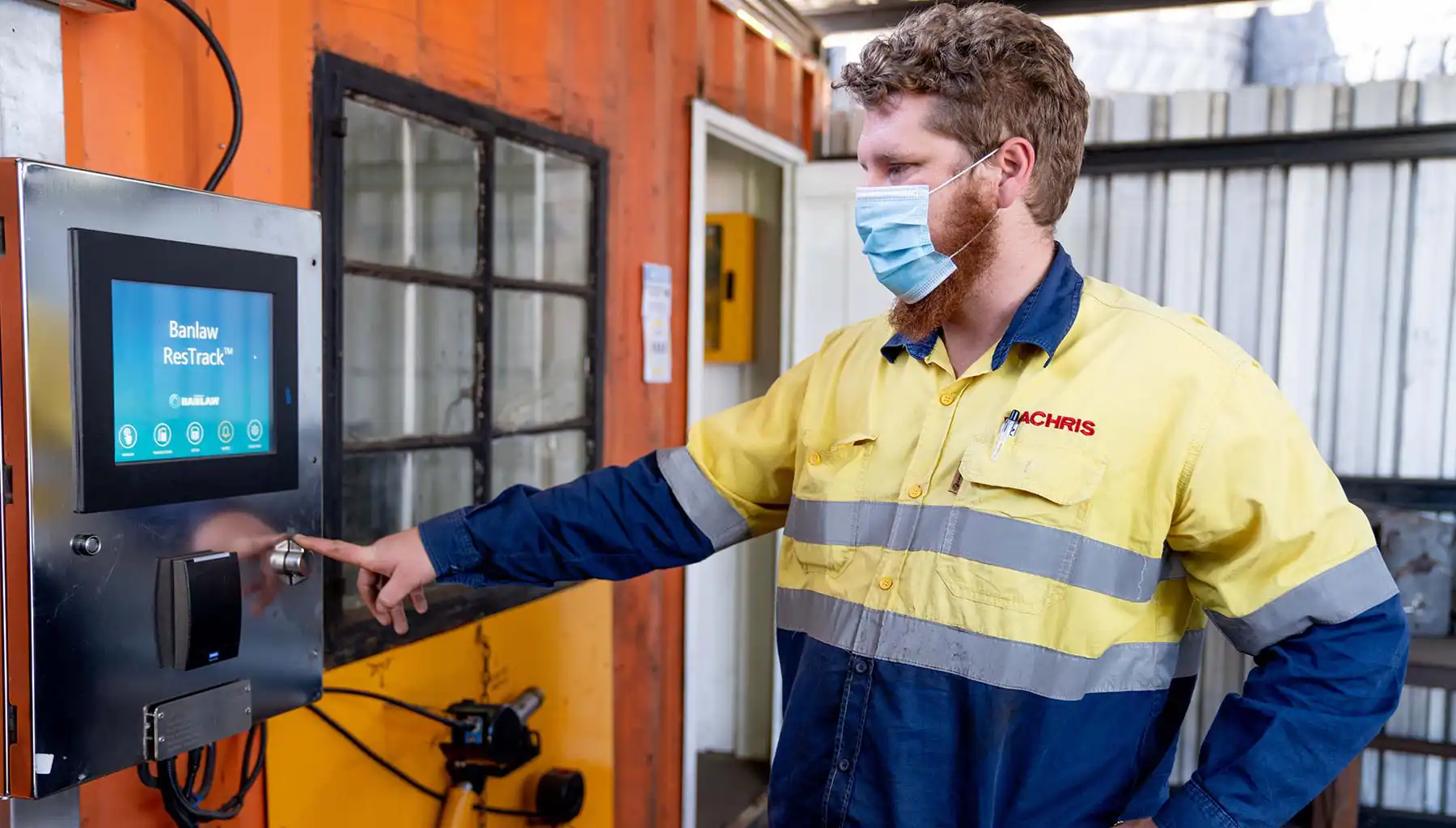
Jachris enables this through RFID-enabled tracking tools, branded as JacTrack. These equipment tracking systems create lifecycle records for critical components, particularly hose assemblies.
This includes:
- Hose identification and replacement history.
- Failure patterns and recurring risk points.
- Service intervals and usage trends.
By building a record of how components perform over time, mines can move from reactive replacement to planned, condition-based maintenance. This also allows teams to move away from generic OEM assumptions and base decisions on site-specific operating data.
Where Data Makes a Measurable Difference
When data is captured consistently, it can deliver value across multiple areas of mine operations.
For instance, Jachris’ containerised maintenance workshops provide a structured on-site environment where maintenance work is recorded as it happens.
Our experienced technical teams capture data at the point of failure or replacement and act on the insights they gain. They do this while accounting for on-site operating conditions, and use standardised processes that reflect site realities rather than estimates.
Equipment Wear and Usage Patterns
Usage data highlights where components are under higher stress due to the environment, duty cycles or operating behaviour. This allows adjustments to maintenance schedules that reflect real conditions rather than assumptions.
Early Identification of Leaks and Failure Risks
Inspection data and service records help flag corrosion, abrasion or degradation before safety incidents occur. Addressing these issues early reduces both risk and disruption.
Hose and Fitting Reliability Monitoring
Hose reliability mining (how hose assemblies perform in mining operations) can be tracked through RFID, allowing maintenance teams to record installation dates, service history, and replacement intervals. This visibility helps identify recurring failure points and improves replacement planning.
Spare Parts and Replacement Planning
Vendor-managed inventory generates accurate consumption data, helping mines avoid stockouts and reduce excess inventory. Parts are available when needed, without tying up unnecessary capital in stores.
Real-World Impact for African Mining Operations
When maintenance and inspection data are visible and actionable, the benefits show up in everyday operations.
- Fewer emergency call-outs: Planned interventions replace last-minute repairs.
- Faster, confident decisions: Teams act on clear, evidence-based insights.
- Shorter, more predictable downtime: Repairs happen quickly with the right parts on hand.
- Safer operations: Early detection of wear or leaks prevents incidents.
- Consistent performance across sites: Standardised data helps dispersed or remote teams maintain reliability.
Jachris derives practical insights from tracking, inspection, and maintenance data, helping mines move from reactive responses to integrating intentional problem-solving and strategy into their daily operations. We provide client KPI reporting based on the data collected through RFID tracking, inventory usage and maintenance interventions.
A Forward-Looking Approach to Data-Driven Mining
Mining operations are under growing pressure to keep pace with today’s digital business landscape. While transformation efforts are gaining momentum, the sector still trails behind comparable industries. The Boston Consulting Group’s Digital Acceleration Index shows that mining is almost 40% less digitally mature than sectors such as automotive or chemicals.
This gap has real operational consequences. As equipment becomes more complex and operating environments more demanding, limited visibility makes it harder to prevent downtime, manage risk, and respond at speed.
A forward-looking approach to data-driven mining means moving beyond reactive fixes and time-based maintenance. By shifting to predictive and prescriptive maintenance, you can anticipate failures, optimise asset performance, and reduce unplanned downtime in measurable ways.
Looking ahead to 2026 and beyond, long-term operational efficiency in mining will depend on data-driven approaches that work in real operating conditions. At Jachris, we support this shift by helping African mining operations close the digital gap in a practical, scalable way.
Power Your Data-Driven Mining with Jachris
Jachris operates 20–30+ on-site workshops across 17 African countries, meaning the data we generate reflects local conditions, not global averages.
Our mining solutions turn operational data into on-site gains in uptime, safety, and performance across African mines.
Data-Driven Mining FAQs
1. Why is data-driven maintenance important in mining?
Because most failures develop over time. Data-driven maintenance helps teams spot early warning signs, reduce unplanned downtime, and plan work more effectively, improving both safety and reliability.
2. How does predictive maintenance improve uptime?
It shifts maintenance from emergency repairs to planned interventions, allowing issues to be addressed before they disrupt production.
3. What types of data are most valuable in mining operations?
Asset condition data, usage history, inspection records, and maintenance activity captured in real operating environments provide the clearest insight into risk and performance.
4. How does Jachris support data-driven mining strategies?
Jachris embeds data capture into on-site maintenance through asset tracking, inspections, vendor-managed inventory, and experienced technical teams who turn data into action.